
*This post may contain affiliate links for which I earn commissions.*
Intro
A lot of men I talk with say the same thing: “I used to camp all the time, but somewhere along the way, life got busy.” Careers, raising families, home repairs — all good things, but they tend to push our quieter pleasures to the edge. By the time we retire, the idea of camping alone again can feel a little rusty. Some worry about safety. Others worry their body won’t cooperate like it used to. And some just aren’t sure what the experience will give them at this stage of life.
I’ll be the first to say this: solo camping after 60 isn’t the same as it was at 30 — and that’s not a bad thing. In fact, it’s better in many ways. You’re wiser, calmer, and far less concerned with impressing anyone. You start noticing things you used to miss — the slow curl of morning fog, the sound of wind shifting through pines, the comfort of doing things at your own pace.
This post is about rediscovering that simple joy. If it’s been a while since you packed a tent and headed out alone, I’ll share what’s worked for me — practical tips, small comforts, and the kind of clear-minded solitude that feels good for the spirit.
Why Solo Camping Feels Different After 60 — In a Good Way
The biggest shift I noticed when I returned to solo trips is how much I appreciate the slowness. In my younger days, every outing felt like a mission: cover miles, summit peaks, push daylight. Now, I camp more like I cook a good pot of chili — unhurried and full of simple pleasure.
When you’re out there alone, the noise in your head finally settles. There’s no schedule, no conversation you have to keep up with, no agenda other than enjoying the day. It’s a rare kind of freedom in a world that rarely gives us any.
I’ve found that men our age actually make better solo campers. We’re more deliberate with our choices. We pack what matters. We know our limits. And we’ve learned that a quiet evening by the fire beats bragging about tough miles any day.
Staying Safe Without Killing the Adventure
A practical word here: solo camping does require a bit more caution as we age. That’s not a reason to avoid it — it’s a reason to prepare well.
Start with your health and mobility. You don’t need to be an athlete, but you should know your comfort zone. Choose campsites with safe footing and easy access to water. Tell someone exactly where you’ll be, when you’ll return, and how they can reach you.
I also carry a small satellite communicator these days. I don’t use it unless I need to, but it’s reassuring to know help isn’t a guessing game if something goes sideways. Same goes for a simple first-aid kit; nothing fancy, just the essentials.
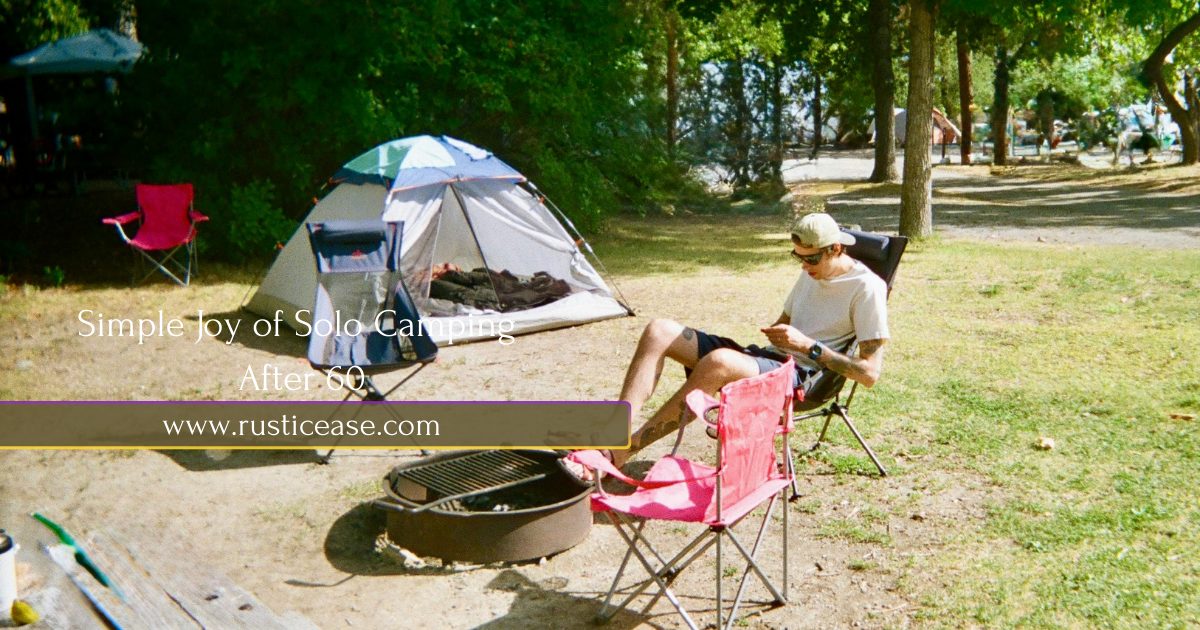
And don’t underestimate the value of a good camp chair. I used to laugh at these when I was younger. Now my knees and back are grateful for a sturdy, comfortable seat while I cook or watch the fire fade.
Affiliate-friendly mentions:
• A lightweight two-person backpacking tent gives you extra room for comfort without much added weight.
• A high-back folding camp chair makes evenings far more enjoyable.
• A compact stove with push-button ignition saves your joints and patience.
Creating Comfort Without Bringing the Whole House
There’s a sweet spot between rugged minimalism and hauling a garage full of gear. After 60, comfort isn’t a luxury — it’s what keeps you out there longer.
For me, that starts with sleep. A modern inflatable pad paired with a warm, roomy sleeping bag does wonders. Add a small pillow from home and you’ll wake up feeling much better than you might expect outdoors.
I also keep cooking simple. One pot, one cup, one spoon. A small stove. A bag of pre-cut veggies, a little olive oil, and whatever protein is easy. The goal is comfort, not a cooking show.
Lighting is another overlooked comfort. A headlamp is handy, but a small lantern sets a warm tone at camp and saves your eyes. I’ve come to enjoy the ritual of slowly dimming things down as the stars come out.
Most of all, I’ve learned not to rush anything. Mornings are slow coffee by the fire. Afternoons are for wandering around camp, reading, or listening to the wind. When you stop treating camping like a task to complete, it becomes something nourishing.
Enjoying Solitude Without Feeling Isolated
Some men tell me they’re worried about feeling lonely out there by themselves. I get it. But solitude isn’t the same as isolation. In fact, solo camping can feel surprisingly companionable — the forest has its own company.
Bring something that helps your mind settle: a book you’ve been meaning to read, a journal, a pair of binoculars for birdwatching. These simple tools give you gentle direction without crowding your time.
One thing I’ve found helpful is to build small rituals into the day. A slow walk after breakfast. A sunset cup of tea. A few notes in a journal about what you saw or felt. These anchors give the day a pleasant shape.
And if you do find yourself craving connection, well, campgrounds are full of friendly people. A simple wave or chat with the neighbor about the weather is often enough.
Solo camping is not about hiding from the world — it’s about remembering you belong to it.
A Simple Solo Camping Routine for Men Getting Back Into It
Here’s an easy framework I use when easing into solo trips after a long break:
1. Pick a Comfortable, Familiar Location
Start with a state park or local forest campground. Nothing remote. Just a spot that feels welcoming.
2. Pack Light but Smart
- Tent
- Sleeping pad + bag
- Comfortable camp chair
- Small stove + single pot
- First-aid kit
- Lantern + headlamp
- Warm layers
- Plenty of water
3. Set Up Early
Give yourself time to settle in, gather firewood, and enjoy the afternoon instead of wrestling with gear in fading light.
4. Keep Meals Simple
Think one-pan dinners and easy cleanup.
5. Slow Down the Evenings
Turn off the lantern early. Let your eyes adjust. Nature has a way of settling your mind if you let it.
6. Check In With Yourself
If something feels off — weather, fatigue, gut instinct — adjust your plans. Experience is your best tool.
Conclusion
Solo camping after 60 isn’t about proving anything. It’s about rediscovering a quiet pleasure that’s been waiting for you. The gear is lighter now, the campgrounds are quieter on weekdays, and you have the time to do it right. You don’t need to go far or stay long. Just step back into the simplicity of being outdoors on your own terms.
You might be surprised how quickly it feels familiar again — like shaking hands with an old friend.